31 October 2007

Episcopal Action

A couple of weeks back I mused here on how a lengthy passage from Dante, about the torments that would befall those who refused to take sides during moral crises, had been paraphrased by John F Kennedy in Bonn in 1963, and how Kennedy's exaggerated paraphrase has since mutated and proliferated further so that the line is to be found scattered throughout the internet, almost invariably attributed to Dante albeit saying something he'd not quite said in rather less words than he'd used to say something slightly different.

It's a common phenomenon.

Think, for example, of that line so often attributed to Edmund Burke, whose brazen form adorns College Green to this day: 'All that is necessary for evil to triumph is for good men to do nothing.' It's a fine sentiment, marvellously expressed; the only problem is that Burke appears never to have said it.

He did, however, say 'When bad men combine, the good must associate; else they will fall one by one, an unpitied sacrifice in a contemptible struggle.' That's not far off the more famous saying, and has the advantage of foreshadowing Martin Niemöller's famous lament about the dangers of silence and self-interest in times of persecution.

Or, more recently, there's that quote that famously adorned Colin Powell's desk, quoting Thucydides as saying 'Of all manifestations of power, restraint impresses men most'. I spent ages looking it up once, because although I didn't recognise the line it certainly sounded like Thucydides, and surely must have featured either in his Mytilene Debate or his Melian Dialogue. I looked in vain, and in retrospect that's to have been expected as it seems that the line is nowhere to be found in the writings of the great Athenian.

On the other hand, to be fair, you'll find the sentiment, if not the words, attributed to Nicias in Thucydides' account of the doomed 'Sicilian Expedition'. Thucydides records the unfortunate and reluctant leader as opining 'And as to us, the Hellenes there would be most in awe, first, if we should not come at all; next, if after showing our power we should after a brief interval depart. '

If Thucydides, Dante, and Burke can be misquoted, you'll hardly be surprised to learn that the same fate has befallen the venerable GKC, and not just for perhaps the wisest and most famous thing he never wrote.

Coraline, Neil Gaiman's deliciously sinister novel for children, is prefaced by a perfectly balanced aphorism by Chesterton: 'Fairy tales are more than true: not because they tell us that dragons exist, but because they tell us that dragons can be beaten.'

It's a fine line, only slightly spoiled by Gilbert never actually having written it. Having sought in vain for ages, starting with 'The Ethics of Elfland' from Orthodoxy and rifling through volume after volume of Gilbert's wise and witty words, I eventually a couple of years back wrote to Dale Ahlquist at the American Chesterton Society, asking did he know where I could find it.

He never said it, apparently. He said something pretty close, though, in an essay from Tremendous Trifles called 'The Red Angel':
Fairy tales, then, are not responsible for producing in children fear, or any of the shapes of fear; fairy tales do not give the child the idea of the evil or the ugly; that is in the child already, because it is in the world already. Fairy tales do not give the child his first idea of bogey. What fairy tales give the child is his first clear idea of the possible defeat of bogey. The baby has known the dragon intimately ever since he had an imagination. What the fairy tale provides for him is a St. George to kill the dragon.

Exactly what the fairy tale does is this: it accustoms him by a series of clear pictures to the idea that these limitless terrors had a limit, that these shapeless enemies have enemies, that these infinte enemies of man have enemies in the knights of God, that there is something in the universe more mystical than darkness, and stronger than strong fear.
The point stands, I think.

Happy Hallowe'en, by the way. Trick or treat, if you prefer.

30 October 2007

When in Rome...

Passive research, the kind of research that comes to you, is great, as Eddie Izzard has remarked. A year or so back I signed up with the Vatican Information Service, so pretty much every day I get hefty e-mails from the Vatican telling me what's going on at headquarters.

I don't always read them, I'm afraid to say, but do so often enough to be able to comfortably refute on a regular basis those of my friends who get huffy about the Church being obsessed, as far as they can see, with sex, Amnesty International, or Harry Potter. It's not, as it happens. These are just the things that the general media think newsworthy. The countless other things it does and says are simply ignored.

But anyway, chatting over pints after mass on Sunday, I wound up mentioning the marvellous address the Pope gave last Wednesday on Saint Ambrose of Milan, which had fascinated me after making its way to my inbox. Since May of last year Benedict has been using his Wednesday addresses to meditate on the Church's apostolic tradition, starting with the original apostles themselves, moving on through Stephen, Paul, and the likes of Timothy and Titus, before, with Clement, beginning to speak of those writers we think of as the Church Fathers.

So I raved awhile, as one does in the pub, over how exceptional Wednesday's address had been, starting as it had done in an uncharacteristically dramatic fashion:
Holy Bishop Ambrose - about whom I shall speak to you today - died in Milan in the night between 3 and 4 April 397. It was dawn on Holy Saturday. The day before, at about five o'clock in the afternoon, he had settled down to pray, lying on his bed with his arms wide open in the form of a cross. Thus, he took part in the solemn Easter Triduum, in the death and Resurrection of the Lord. "We saw his lips moving", said Paulinus, the faithful deacon who wrote his Life at St Augustine's suggestion, "but we could not hear his voice". The situation suddenly became dramatic. Honoratus, Bishop of Vercelli, who was assisting Ambrose and was sleeping on the upper floor, was awoken by a voice saying again and again, "Get up quickly! Ambrose is dying...". "Honoratus hurried downstairs", Paulinus continues, "and offered the Saint the Body of the Lord. As soon as he had received and swallowed it, Ambrose gave up his spirit, taking the good Viaticum with him. His soul, thus refreshed by the virtue of that food, now enjoys the company of Angels" (Life, 47). On that Holy Friday 397, the wide open arms of the dying Ambrose expressed his mystical participation in the death and Resurrection of the Lord. This was his last catechesis: in the silence of the words, he continued to speak with the witness of his life.
So anyway, I warbled on, and it was pointed out to me that the recent addresses have all been rather special, as patristics is very much the area in which Benedict has specialised, and this sent me off on one of my hobbyhorses about the importance of the Church Fathers, or more specifically the very earliest of the Church Fathers, the ones who we know as 'the Apostolic Fathers': St Clement of Rome, St Ignatius of Antioch, St Polycarp of Smyrna, St Papias, and the authors of the Epistle of Barnabas, the Shepherd of Hermas, and the Didache.

These were, in effect, the disciples of the disciples, the very first Christians to have been taught by the apostles, those who were introduced to Christ before all the books of the New Testament had been written, let alone collected and canonised. I'm not saying by any means that these are as important as the Bible itself, let alone being more important, just that from the point of view of discerning what the apostles taught and ensuring that what we believe is in line with the teaching of the apostles that the writings of the Apostolic Fathers have an almost deuterocanonical status. Not quite. But almost.

John Wesley recognised the importance of the Fathers when he called them 'the most authenthic commentators on scripture, as being both nearest the fountain, and eminently endued with that Spirit by whom all Scripture was given,' and he surely had a point.

Look, the Bible is often very far from clear. The second letter attributed to St Peter specifically warns against how scripture can be misunderstood and distorted (2 Peter 3.15-18). St Luke shows this to good effect both in his description of how the resurrected Jesus interpreted the Jewish scriptures along the road to Emmaus (Luke 24.25-27) and his tale of the Ethiopian eunuch, lamenting to St Philip that he despairs of ever understanding the scriptures without someone to guide him (Acts 8.27-35).

There are few guides, as Wesley admitted, more sure than the first of the Church Fathers. St Ambrose is a bit later, but as the mentor of St Augustine and the man who introduced the art of lectio divina to the West, we'd be foolish and arrogant to ignore him.

29 October 2007

Three bees or not three bees...

I was disappointed, on striding into the Students' Union building this afternoon, to see empty desks where there would normally be great stacks of our student newspaper. One of the repercussions of 'reading week', I suppose. Still, I missed being able to peruse a fresh issues, especially since this year Student Direct has finally set itself up as a fairly credible representative of the fourth estate.

A bit late, you might think, but while there's an old adage about how there's little point in parrying a blow when the axe has fallen, for every saying to the effect that a stitch in time saves nine, there's another that says better late than never.

It's interesting, then, to see how Student Direct seem to have woken up to the - shall we say questionable? - nature of certain policies being pursued by the new University. Perhaps this isn't really surprising, though, in the light of stories in the national media back in the spring about the University being in a state of financial crisis, even if that crisis has now been alleviated somewhat. Apparently.

I mentioned recently how one student, already doubting whether he'd chosen the right course and University, found that he was sharing his room with thousands of wasps, perhaps ironically considering that their more industrious cousins on the University's emblem. That in itself wouldn't have been so bad: more serious, if reports can be trusted, are how the University's porter, security, and cleaning services dealt with the problem: I would say that the issue seems to have been swept under the carpet, but it seems that there was a dearth of cleaning staff to do the sweeping.

It's a telling anecdote, not least because of how it's part of a trend in recent issues of Student Direct to highlight unsatisfactory service on the part of the University. I know, that's customer-speak, but the University seems to want to think of itself as a business nowadays. Fair enough. But if it's to be a business, then please God let it be a well-run business, and let it keep the interests of its stakeholders in mind at all times. Who are its stakeholders, anyway? The students? The taxpayers?

Seriously, though, look at the pattern this year. It starts with the University dropping in national league tables, falling to just 29th in Britain according to The Times. I'm not sure what caused the absurd queues of Freshers' Week, but it surely smacks of logistical incompetence. We hear of a residential tutor being wrongfully dismissed and the University being chastised for the handling of this by a national adjudicator. It seems people aren't happy about the way the academics are segregated from the students in the new social science building; presumably this is to enable them to work in peace on their research with a view to the 2015 agenda, but it's not really a policy designed to keep students happy, evidently. But then, it seems the students are restless anyway, judging by a recent poll on how dissatisfied they are with the feedback they receive - mind you, there's no hint in the article about the methodology used in this poll.

Then we have reports of ropey security in University accommodation, which is particularly troubling for all sorts of reasons. Add to that reports of huge cutbacks in the IT services across the University, and it's not really surprising that the establishment of a new cafe in the library should be greeted with disdain and comments about the pressure on space in the library anyway, especially at a time when departmental universities are dropping like, well, wasps.

It's not good, and assuming all this is true, it rather explains the recent protests at one of the University's prestigious events. I think the protesters stepped over the line with some of the things they said, although there was a certain charm to their chants, but it's easy to understand why they're so frustrated.

IF things are as bad as they seem to be, then the University can recruit all the Nobel laureates it wants and its students won't care. But then, does the University care what they think? At times I wonder whether the University is more interested in recruiting the students it wants than educating the students it's got. I hope not.

In any case, I'm impressed by the new vigilance of Student Direct, which is getting increasingly close to asking the crucial question of whether it is right to sacrifice the interests of the students of today in order to benefit the hoped-for students of tomorrow.

Watch this space, I guess.

28 October 2007

The only programme I'm likely to get on...

One evening after mass, a couple of years back, the parish and chaplaincy had a murder mystery evening, where I was bullied into bellowing as a belligerent baron; my initial reluctance eventually giving way to immense enthusiasm, I was rewarded by many a complement and a stomach-warming introduction to the homely joys of corned beef hash.

I've tried making it myself since, and have always liked my handiwork, but it hasn't been the same. That night's hash had a spendidly soupy quality that memory improves by the day.

Anyway, a glance this evening - between amusing games of one sort or another - at the chaplaincy's schedule for the term has intrigued me. It says, and I quote, with reference to a couple of Sundays from now:

MASS

MURDER
MYSTERY

I'm not sure what to make of that. Is there to be a murder mystery evening after mass? Or is there to be a mass murder mystery?

If it's the latter my money's on the young lad with lank hair and a long dark coat.

Am I allowed to say that?

27 October 2007

Cryptic, I Know

A friend of mine makes much of how it's impossible to walk anywhere in Manchester with me without us randomly bumping into a handful of pretty friends of mine; today's been a poor day on that front, with me having but met one such lass randomly, though I've made up for it with the ones I'd planned to meet.

Ahem.

Anyway, I'm back. I have some work to do, some books to return, some people to see, some letters to send, and a presentation to attend, as well as coffee to quaff and friends to meet. It'll be busy. I may go to see my cousins in the Rylands, perching on the banisters.

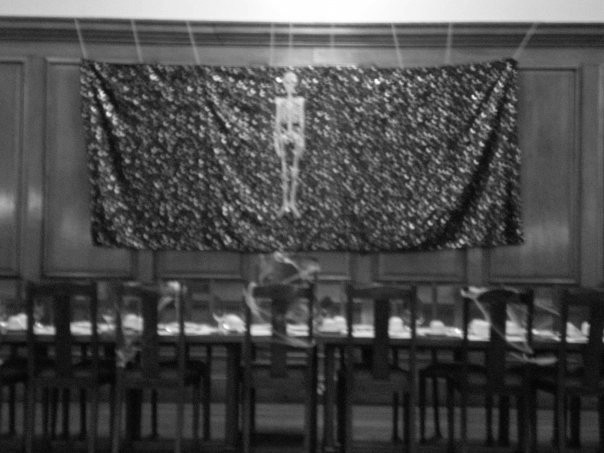
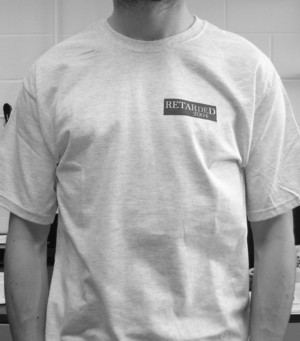
Getting here was gruelling, but at least there were no nautical fiascos like yesterday. It's been a long and interesting day, and one that's allowed me to crack my 'skeleton at the feast' joke a few times. I'd show you a photograph, if I didn't think it might lead to trouble. Hell, I'd be wearing my T-shirt if I didn't think it too would lead to trouble. You know the one? With the logo? No?

I'm really being very prudent, believe it or not. I don't think discretion is the better part of valour, but it is certainly a valuable part of that arsenal.

Oh there'll be stories to tell when all this is over. Or maybe over dinner on Monday.

Anyhow, my wine is waiting. Adieu.

26 October 2007

Upon this Rock

A month or so back I was talking to a friend of mine of how much I like Tom Wright, the Anglican Bishop of Durham, who always strikes me as a model educated Christian, being thoughtful, intelligent, humble, and sincere.

'Well, of course you like him,' said my friend, 'he's a historian. But my faith means much more to me than that.'

I'm afraid this attitude baffles me, not least because it assumes that approaching the Bible as a historical document precludes us from approaching it in a prayerful manner. That's absurd. When Our Lord calls on us to welcome the Kingdom of God like little children, it's humility, not stupidity, that he's demanding of us. Innocence, not ignorance. We've been given brains, and we're called upon to use them.

We shouldn't be afraid of facts. Look at 1 Corinthians 15, where St Paul makes no bones about the fact that Christianity would be pointless if it weren't based on a real, historical resurrection, and reels off a list of witnesses to back up his story. I think that approach still works. It does for me, anyway. It gives me somewhere to stand when I pray.

All of which leads me to Hilaire Belloc, and to Eamon Duffy.

Duffy, as recognised in this review, has 'a genius for recovering worlds we have lost'. He unforgettably achieved this in The Stripping of the Altars: Traditional religion in England, 1400-1580, where:
His meticulous and beguiling reconstruction, along with his exploration of the psychological and spiritual devastation caused by the Tudors’ wrecking of the physical culture of the late-medieval Church, demonstrated that the Reformation was “a great cultural hiatus, which had dug a ditch, deep and dividing, between the English people and their past”—a past that over merely three generations became a foreign country, impossible for the English to regard as their own. The book stirred the English popular and scholarly mind from a historical and cultural complacency bred of Protestant and Whiggish triumphal­ism.
As this fellow Chestertonian has noticed, there's more than a whiff of Belloc's Europe and the Faith about such a project. Europe and the Faith is a remarkable book, where Belloc as polemicist trounces Belloc the sober historian in a heroic attempt to redress the scholarly imbalance. It does the job with panache, but for these drier times I think a modern, scholarly edition with some footnotes to put academic meat on Belloc's perceptive bones would do it even better.

Still, if you're willing to check the facts yourself afterwards or just take the ebulliently erudite Belloc at his word, take a look at chapter two in particular. Belloc draws on the few documents we have to sketch a remarkably compelling pen-picture about of the Church in the Second and early Third Centuries:
It is a highly disciplined, powerful growing body, intent on unity, ruled by bishops, having for its central doctrine the Incarnation of God in an historical Person, Jesus Christ, and for its central rite a Mystery, the transformation of Bread and Wine by priests into the Body and Blood which the faithful consume.
He points not just to the canonical books of the New Testament - which at this point had yet to be canonised! - but to the writings of St Clement of Rome, of St Ignatius of Antioch, of St Justin Martyr and of Tertullian, in order to show that the things which now are the hallmarks of the Catholic Church have been the hallmarks of orthodox Christianity for as far back as we can speak with any certainty.

All of which is a long-winded way of bringing up how BBC Radio 4 has started what looks like a marvellous series of short radio documentaries on the Papacy, presented by Eamon Duffy. The first one is, rightly, about St Peter, and focuses at some length on his puzzling disappearance in Acts and the discovery in 1939 of what seems to have been his tomb under St Peter's in Rome.

Seriously. Listen to it.

25 October 2007

Ever Closer?

It seems that should the Irish anti-European movement feel a need for some fresh legs, they're available in France, as Jean-Marie Le Pen has declared his willingness to come to Ireland to campaign against the latest EU treaty, should he be invited to share his wisdom with us.

Apparently the new treaty is merely a clever reworking of the rejected constitution, with 90 per cent of the new treaty's text being taken straight from the proposed constitution, and that it's a criminal conspiracy and a denial of democracy. And, and I love this bit, he wonders who will defend French interests when the number of commissioners is reduced in 2014?

Is he ignorant, stupid, or just dishonest? The commissioners don't represent their countries' interests, after all, and indeed are bound to act independently of their governments and other specific interests. Sure, the Irish commissioner is often wheeled out to talk to the Irish and so forth, but just because he'll talk to the Irish doesn't mean that he'll listen!

I'll be curious to see how Ireland will handle this referendum when it comes around, because I'd be surprised if the government will ever again be as lethargic as it was during the first 'campaign' for the stopgap Nice Treaty which failed just because the 'yes' voters didn't bother to come out. Seriously, do the maths: in every European referendum since we've voted to join the then EEC, roughly 20 per cent of eligible voters have voted against European integration.

The anti-European vote in Ireland is small, disciplined, and diverse, gathering together most of the extremities of Irish political discourse under one umbrella; I'm not sure what will happen now that the Greens are in government, though. I have a feeling the 'no' vote will drop, unless people decide to use it to protest against the government, having spurned that opportunity in the recent election.

Meanwhile, across the water, the usual clowns are bellowing for a referendum, something which Blair seems to have been pressured into promising for the constitution that this treaty most certainly isn't.

British eurosceptics have an annoying tendency to forget that this was voted on before, back in 1975, when two thirds of British voters voted to stay within the European Community. 'But that was just for a common market!' they will wail. No, it wasn't. Read the first sentence of the treaty of Rome, which says that the signatories are establishing the common market in order to 'lay the foundations of an ever closer union among the peoples of Europe'.

Ever closer union. The new treaty, which isn't nearly as significant as the Maastricht Treaty for which hardly anyone demanded a referendum, gets rid of that aspiration, and offers countries a secession mechanism, a something there's been no scope for in previous treaties. You'd think the anti-Europeans would want this treaty passed...

24 October 2007

No Selfish Strategic Interest

Back in 1990, Peter Brooke, the Northern Ireland Secretary of the day, famously remarked that that Britain had no selfish strategic interest in Northern Ireland, and that it would accept the unification of Ireland if the people wanted it. It was a historic moment, as a representative of the government of the United Kingdom was declaring that part of the UK could leave the Union if its people so wished. A few years later, in December 1993, John Major put this sentiment rather more formally, as part of the Downing Street Declaration.

I couldn't help but think of this today, when reading that as of 2009, the common travel area between Ireland and Britain is - in effect - to be abolished. Apparently the British have decided to develop an electronic border control in order to track the movement of suspected terrorists and criminals, as well as illegal immigrants, and this will mean that everyone arriving in Britain by sea or air will be required to produce their passport on arrival; the Irish government are planning to introduce a similar system.

Leaving aside the question of whether this will achieve what it's supposedly intended to achieve, to the average traveller this won't make an ounce of difference: Irish people usually have to produce their passports when leaving British airports, and regularly have to produce them on arrival at British ports, while everyone has to at least gesture with their passport on arriving at Irish ports of airports. The common travel area has been compromised for some time.

But here's where it gets interesting: there still won't be any border controls between Northern Ireland, which is part of the UK, and the Republic of Ireland, which hasn't been since 1922. Unless you fly, I suppose. The thinking, apparently, is that this would be impossible to police.

Maybe so, and it would surely undermine much of the work done through the Peace Process. But if, as seems to be the plan, all sea and air passengers within the common travel area will be required to be in possession of a valid passport, what this will mean is that those Ulstermen who see themselves as British will need to carry a passport to visit Britain, but will be allowed to move freely among their fellow Irishmen. This was the case for a few years after the Second World War too, but back then the British were very keen to claim Northern Ireland as part of the UK. Things are different now.

Interesting times, and that's not even getting into the question of whether Ireland might now consider joining the Schengen Agreement...

23 October 2007

Happy Birthday, Dear World

One of my favourite books, bestowed with worrying predictability on those dear to me, is Terry Pratchett and Neil Gaiman's Good Omens, a book which I usually introduce to those fools who look askance on Mr Pratchett's books as 'the Pratchett book for people who don't like Pratchett'. Generally speaking, the name of Neil Gaiman doesn't evoke such scepticism, as those people who aren't devoted to his work tend just to be generally unaware of it, to a greater or lesser degree.

Anyway, Good Omens is a jewel of a book: a supremely English hybrid of The Omen, cold war spy novels, P.G. Wodehouse, Douglas Adams, and Anthony Buckeridge, it's well worth delving into not least for unforgettable asides on such matters as the M25 being a prayer wheel for Satan, memorable biblical errata, Pavlovian reactions among the ducks at Saint James's Park, and why the British resisted decimalisation for so long.

Indeed, the book almost begins with such a passage:
Archbishop James Usher (1580-1656) published Annales Veteris et Novi Testamenti in 1654, which suggested that the Heaven and the Earth were created in 4004 BC. One of his aides took the calculation further, and was able to announce triumphantly that the Earth was created on Sunday the 21st of October, 4004 BC, at exactly 9.00 a.m., because God liked to get work done early in the morning while He was feeling fresh.

This too was incorrect. By almost a quarter of an hour.

The whole business with the fossilized dinosaur skeletons was a joke the palaeontologists haven't seen yet.

This proves two things:

Firstly, that God moves in extremely mysterious, not to say circuitous ways. God does not play dice with universe; He plays an ineffable game of His own devising, which might be compared, from the perspective of any of the other players*, to being involved in an obscure and complex version of poker in a pitch-dark room, with blank cards, for infinite stakes, with a Dealer who won't tell you the rules, and who smiles all the time.

Secondly, the Earth's a Libra.
All of which is very funny, and very clever, and not nearly as blasphemous as the more senstive among us might think, which could explain why Good Omens won the authors an award for religious fiction, much to their surprise, as they had expected bricks through their windows.

It is, however, not true. The problem's not so much that Ussher is spelled wrong, although it is, or that Sir John Lightfoot, who calculated that moment of all creation was nine in the morning, was not an aide of Ussher and arrived at the same date independently of the esteemed Archbishop of Armagh, although that's apparently true too, as that both men had set the date of creation at 23 September 4004 BC, rather than 21 September.

Not a big deal, you might think, except that often the sun moves into the constellation of Scorpio on 23 September.

Yep, it's entirely possible that the earth is a Scorpio.

Either way, happy birthday.


* i.e. everybody

22 October 2007

If you can keep your head...

I realise that self-praise is no praise, but I'm very proud of how I entitled yesterday's post; triple puns, however agonising, are surely as worthy of respect as they are of groans.

Precision in language is something that matters, after all.

Indeed, it was with reference to that that Neil commended me the other evening: in talking to a friend, a fellow grammar nazi, he had remarked that I had recently, in the course of one of our lengthier phone conversations, managed to realise and assert that a certain statement demanded the use of the pluperfect, and that I done this while drunk.

Delighted by this, I exclaimed that that was nothing: had he ever heard of how the Duke of Wellington issued orders during the heat of battle?

And casting aside my headset I spun round and clambered up my shelves to stretch for The Mask of Command, John Keegan's enthralling - if uneven - analysis of the nature of leadership, to read aloud a description of how Wellington had dashed off the following instruction:
'I see that the fire has communicated from the haystack to the roof of the château. You must however still keep your men in those parts to which the fire does not reach. Take care that no men are lost by the falling in of the roof, or floors. After they will have fallen in, occupy the ruined walls inside of the garden, particularly if it should be possible for the enemy to pass through the embers to the inside of the House.'

Wellington's clarity of mind and conciseness of expression were famed. To have written such purposeful and accurate prose (the note contains both a future subjunctive and future perfect constructions), on horseback, under enemy fire, in the midst of a raging military crisis is evidence of quite exceptional powers of mind and self-control.
I'm really not sure which is more impressive here, the fact that Wellington was capable of writing with such precision in such a situation, or the fact that he was capable of it at all. Probably the former, on balance, but then the ability to stay calm when the all breaks loose is surely one of the defining attributes of the true commander. What was it Napoleon said?
The first quality of a General-in-Chief is to have a cool head which receives exact impressions of things, which never gets heated, which never allows itself to be dazzled, or intoxicated, by good or bad news.
Clausewitz says it too, of course, and does so at some length, but having already quoted from the two military masters of his age, I'll forego the pontifications of their most astute student. Still, it's interesting, I think, that the quality which Napoleon saw as the hallmark of the general was to Kipling simply the hallmark of a man.

21 October 2007

A Bold Title

Amongst the Facebook notifications clogging up my e-mail today - and if anyone's reading, I have no real wish to become a pirate, a ninja, a zombie, a vampire, a werewolf, or even a slayer - I had an e-mail from Amazon, suggesting that - having bought a book or two over the years on the general topic of Carthage's Greatest Son™ - I might be interested in Hannibal's Last Battle: Zama and the Fall of Carthage.

Without moving in the direction of personal abuse towards the author, I can't help feeling that this title does the book no favours. It's a tad extravagant, to be frank.

For starters, Carthage didn't fall until 146 BC, a full 56 years after Scipio's victory at Zama in 202 BC; I'd be loathe to link the two events too directly.

But as for Zama as Hannibal's last battle? Well, yeah, I guess so, as long as you're operating on the assumption that Hannibal's story ended with his defeat at Zama, or else that sea battles don't really count...

After all, Livy and Cornelius Nepos both tell us of Hannibal commanding the left wing of a Seleucid fleet against the Rhodians at the Battle of Side in 190 BC, and although Hannibal was defeated in that, his first naval battle, Nepos records how he led the Bithynian navy to a famous and bizarre victory against Eumenes of Pergamum a few years later.

According to Nepos,
'Hannibal was outnumbered in ships; therefore it was necessary to resort to a ruse, since he was unequal to his opponent in arms. He gave orders to collect the greatest possible number of venomous snakes and put them alive in earthenware jars. When he had got together a great number of these, on the very day when the sea-fight was going to take place he called the marines together and bade them concentrate their attack on the ship of Eumenes and be satisfied with merely defending themselves against the rest. . .

When the clash came, the Bithynians did as Hannibal had ordered and fell upon the ship of Eumenes in a body. Since the king could not resist their force, he sought safety in flight, which he secured only be retreating within the entrenchments which had been thrown up on the neighbouring shore. When the other Pergamene ships began to press their opponents too hard, on a sudden the earthenware jars of which I have spoken began to be hurled at them. At first these projectiles excited the laughter of the combatants, and they could not understand what it meant. But as soon as they saw their ships filled with snakes, terrified by the strange weapons and not knowing how to avoid them, they turned their ships about and retreated to their naval camp.'
I know, it sounds very unlikely, but it's certainly not impossible. It wouldn't have been the first time Hannibal had engaged in unusual animal tactics, after all, and it wouldn't have been the first time in history that anyone thought they could gain the upper hand in a war by lobbing dangerous animals at their enemy - beehives, hornet nests, and scorpion bombs have all been used over the years, it seems.

For what it's worth, you can get a fine snapshot of what happened when Hannibal met his match at Zama in this clip from a History Channel documentary of a few years back. Mind, I reckon the clips describing Hannibal's greatest victory and evaluating the one-eyed genius are even better.

They just have something special. I don't know, maybe it's just me. Judge for yourselves.

20 October 2007

To Be Frank

I don't want to get into a habit here of quoting people at length, especially when that length far exceeds the rule I set myself when I started this, but yesterday's Irishman's Diary in the Irish Times is worth making an exception for, especially considering how nicely it dovetails with my own thoughts on quotations yesterday:
Lonely Planet's choice of Ireland as the world's friendliest country will come as a surprise to many of us who live here, writes Frank McNally

[. . .]

But at least the LP's tribute to our "deliciously dark sense of humour" still rings true. Indeed, I was forcefully reminded of this treasure only recently when reading, of all things, the Lonely Planet Guide to Irish Language and Culture . Under the sub-heading of "pub etiquette", for example, the book warns visitors about our infamous "round system", viz: "To the outsider, the round system may appear very casual. You might not be told when it's your round and others may appear only too happy to stand in for you. But make no mistake, your failure to 'put your hand in your pocket' will be noticed.

"People will mention it the minute you leave the room. [The reputation] will follow you to the grave, [after] which it will attach to your children, and possibly theirs as well. In the worst cases it may become permanently enshrined in a family nickname."

At first I thought this was funny because it was true. Then I realised that, no, it was funny was because I wrote it myself: about 10 years ago, as part of a spoof visitors' guide in The Irish Times's St Patrick's Day magazine.

Now, here it was in Lonely Planet , without attribution, or even a set of inverted commas to hint at authorship. Of course I should have complained to the publishers. But I didn't. The damned Irish sense of humour wouldn't let me. Besides which, I'd rather talk about them behind their backs.

In fairness to LP, it was only a paragraph. And that St Patrick's Day guide is now scattered all over the Internet, on a wide range of Irish-themed sites, many with hideous green backdrops. It is reproduced in multiple forms, the only common factor of which is anonymity. Annoyingly, people have even taken to adding their own bits.

The spoof has become like a traditional fiddle tune now, constantly being adapted to local styles. Except that a fiddle tune would have a name - McNally's Lament , perhaps - that acknowledged its origins. But I used to comfort myself that at least the piece was fulfilling a need among the Irish diaspora, whose members must be under constant pressure to be funny, despite being exiled from the rich source of humorous material that we call Ireland.

[. . .]

I hope Lonely Planet doesn't think it petty of me to mention the purloined paragraph. I blame our history. As the Bluelist notes: "Centuries of turmoil, conquest and famine. . . have certainly taken their toll on the Irish." That's the problem. When even a stray sentence of ours goes unattributed, that old feeling of dispossession comes back to haunt us. It's as if planters have seized the family small-holding all over again.

Of course, as LP notes, this psychosis is also the well-spring of our sense of humour. And although I consider Ireland's Bluelist showing as reward enough for my small part in the effort, far be it from me to discourage the LP people should they wish to express their gratitude in a more, well, German way. I won't mention anything so vulgar as an amount. But a good guideline would be that, if we ever meet in one of Dublin's trendier pubs, my round of drinks is on them.

I tend to think that the Irish Times is rather tired nowadays, and that it's not a shadow of what it used to be, but one definite improvement of late has been Frank's supplanting of that blowhard Myers on the editorial page. That alone's often worth the entry price.

19 October 2007

I'm Covered in Bees!

I saw a marvellous quotation the other day, attributed to Dante: 'The darkest places in hell are reserved for those who maintain their neutrality in times of moral crisis.'

I liked it straight away, but couldn't help think that despite it being punchy and damning, it didn't sound very poetic. Did Dante really say that?

So I started looking online, digging about, and eventually found that despite about 35,000 webpages blissfully attributing this line to Mr Aligheri, this is actually a misquoted misquotation.

It seems that in a 1963 speech establishing the German Peace Corps, JFK claimed that 'Dante once said that the hottest places in Hell are reserved for those who in periods of moral crisis maintain their neutrality.'

It looks as though he was referring to a fairly famous passage in the Inferno which describes the cowardly angels and others who refused to take sides as being punished for eternity by being whirled through the air on the outskirts of Hell while being tormented by wasps and horseflies.

Now sighs, loud wailing, lamentation
resounded through the starless air,
so that I too began to weep.
Unfamiliar tongues, horrendous accents,
words of suffering, cries of rage, voices
loud and faint, the sound of slapping hands --
all these made a tumult, always whirling
in that black and timeless air,
as sand is swirled in a whirlwind.

And I, my head encircled by error, said:
'Master, what is this I hear, and what people
are these so overcome by pain?'

And he to me: 'This miserable state is borne
by the wretched souls of those who lived
without disgrace yet without praise.
They intermingle with that wicked band
of angels, not rebellious and not faithful
to God, who held themselves apart.
Loath to impair its beauty, Heaven casts them out,
and the depth of Hell does not receive them
lest on their account the evil angels gloat.'

And I: 'Master, what is so grievous to them,
that they lament so bitterly?'
He replied: 'I can tell you in few words.
They have no hope of death,
and their blind life is so abject
that they are envious of every other lot.
The world does not permit report of them.
Mercy and justice hold them in contempt.
Let us not speak of them -- look and pass by.'

And I, all eyes, saw a whirling banner
that ran so fast it seemed as though
it never could find rest.
Behind it came so long a file of people
that I could not believe
death had undone so many.
After I recognized a few of these,
I saw and knew the shade of him
who, through cowardice, made the great refusal.
At once with certainty I understood
this was that worthless crew
hateful alike to God and to His foes.
These wretches, who never were alive,
were naked and beset
by stinging flies and wasps
that made their faces stream with blood,
which, mingled with their tears,
was gathered at their feet by loathsome worms.

Kennedy's clearly overplaying his hand, and I'm not quite sure how we square this with Divine mercy, but I have to say, this sounds like a fine fate for those who'll stand by and watch while wickedness is afoot, rather than, say, an innocent student who just happens to be unfortunate enough to have been allocated a dodgy room.

Yes, and you thought being covered in bees was funny, didn't you?

18 October 2007

The Potter and the Carpenter

A few weeks back, a night or two before a couple of my more intrepid friends left these Hibernian shores to explore the Orient, I troubled them and friends of theirs with a rather risque reading of the Harry Potter books. Basically it was a crude magic-as-sex equation focusing on the Hogwarts experience as a magical rather than a sexual coming of age. Wands as penises and cauldrons as wombs were at the heart of the analysis, along with generalised observations about celibate teachers, emasculation, and surrogate homosexuality. I quoted chapter and verse with a gleeful grin as eyes widened, brows furrowed, jaws dropped, and ears were covered.

I may come back to it someday.

To balance out that reading, I felt obliged to whisk through a quick and rather more wholesome Christian analysis of the books, doubtless to the astonishment of one of my more brilliant friends who had remarked some years back that it was a shame that I'd ditched English as an undergrad to focus on History; English would have taught me how to read, she'd said. I'm pretty sure that between my comedy Freudian analysis and my sober religious reading I redeemed myself that night.

The Godric's Hollow sequence in Harry Potter and the Deathly Hallows is central to any Christian interpretation of the series.

We've known since Harry Potter and the Philosopher's Stone that the magical community celebrate Christmas, but there's never been anything to suggest that it was anything other than a secular holiday for them. HPDH changes that, as we're basically told that the magical community attend Christian services, at least at Christmas, and that they receive Christian burials. This should remind us that Harry was baptised and had a Godfather. Indeed, if we've been paying attention we'd have noticed earlier in the book that Harry marked the burial place of Moody's magical eye with a cross.

In the churchyard Harry and Hermione find the Potter and Dumbledore family graves, respectively adorned with quotations from 1 Corinthians 15.26 and Matthew 6.19, passages that arguably give us the keys to how the series should be interpreted - though I think we should be careful about casting J.K. Rowling as a modern C.S. Lewis. Her books have Christian themes: they're not straight allegories.

Not just themes, mind, but imagery too. Look at the War Memorial in Godric's Hollow, magically transforming into a statue of a man and a woman cradling a baby; yes, they're the Potters, but it's hard not to see them as a surrogate Holy Family, especially considering that it's Christmas and the Lily was the classic medieval symbol for Mary; that Harry is a Christ figure is obvious enough.

Or think about how Ron finds his friends. Yes, he basically follows a star, doesn't he? At Christmas?

There's plenty more to be said on that, but lest you think I'm reading too much into it, I'm glad to see that J.K.R. has basically come clean.

17 October 2007

Mmm Mmm Mmm Mmm

A friend of mine in Manchester often says that he usually prefers the productions in the Royal Exchange's Studio theatre to those in the main theatre itself. He finds them more experimental, more interesting, and often simply more fun. I've only been to the Studio twice, but have been pretty impressed both times, especially by the staggering Knives in Hens.

This season sees two plays that premiered in the Studio getting a full run in the theatre proper. I'll be curious to see how they work out. The first, The Flags, won a ganseyload of awards last year, and had a healthy run at the recent Dublin Theatre Festival, although it didn't get unambiguously positive reviews.

Written by Bridget O'Connor, and directed by Greg Hersov, who seems to direct everything at the REx, the play is apparently a hugely funny tale of two lifeguards:
JJ and Howie are lifeguards on the second-worst beach in Ireland. The job running the BEST beach in the country is unexpectedly vacant and these two are determined to clean up their acts and get the job. The trouble is JJ and Howie are not very good at being lifeguards. In fact, they're alarmingly bad...

The best beach in Ireland, according to the play, is Banna Strand, perhaps best known as the spot where poor auld Roger Casement was captured in 1916, trying to smuggle in arms for the Easter Rising. In the play it's described, apparently, as the perfect beach 'with tits and ass as far as the eye can see'.

A big hit in Manchester, but met with scepticism in Dublin. I'm intrigued. It could be worth a look - maybe on a Monday.

Anyway, speaking of lifeguards, have you ever considered what happens when an enormously fat person is drowning? No, I hadn't either, until today, when I read that a Denbighshire company has created a 28-stone training dummy so that lifeguards and firemen can practice rescuing obese people. Lifting them takes some doing, I gather.

All of which reminds me: if you're ever at Alton Towers, about to set off on the stomach-churning launch of the Corkscrew, it's best not to glance over towards Rita, Queen of Speed, at least if you've not yet braved its insane acceleration.


Because if you do you'll see, piled on the ground below the tracks, heaps and heaps of crash test dummies.

I'm not sure if they were intact.

But I'm pretty sure they didn't have arms.

16 October 2007

Ah, would yeh look at the state of Israel!

Some years back, as I was sipping a quiet pint down the back of my local, one of the barmen, an old friend, came and perched by me. Picking up and flicking through the book I had been reading, a perceptive and popular analysis by two prominent American academics of ancient military disasters and the lessons they offer for modern strategists, he laughed.
'I like this. It says "bollixed".'
'No it doesn't,' I said, scrunching my face up to dismiss such an absurd idea.
'It does! Look!'
And indeed, to my astonishment, he stretched out his hand to show me page 144, dealing with the Second Punic War:
'Hannibal's daring march across the mountains and sudden arrival in the Po Valley bollixed Roman plans for a pincers attack on Spain and Africa: the Roman force sent to Spain was allowed to proceed, but an expeditionary force in Sicily under the consul Tiberius Sempronius - intended for a seaborne thrust at North Africa - was withdrawn to defend northern Italy.'
Yep. Bollixed. Spelt after the fashion of Roddy Doyle, no less. Had Professors Strauss and Ober been reading The Commitments, I wondered. I didn't wonder very long, to be fair, instead just filing this episode away under 'A' for 'anecdote'.
Until today. Mark Shea, over at his (professional Catholic) website, discussing the State of Israel, comments:
'I regard Israel as a secular nation state, not as the fulfillment of biblical prophecy. I think it subject to the same rights and responsibilities under natural law that all nation states are subject to. I do not think it is the object of Special Revelation, much less the recipient of Special Privileges.
So I think views like the one expressed here are mischievous because they bollix up the political conversation with theological claims which I think form no part of the apostolic deposit of faith and are, emphatically, human tradition masquerading as revelation.'
There it is again. Bollix. Is this part of standard speech in American English?
A few years ago a report was commissioned in Britain for the likes of the BBC and the the Broadcasting Standards Commission in order to establish what words people found most offensive, and 'bollocks', rendered in its traditional British manner, fell in ninth place, dangling between 'prick' and 'arsehole'.
If 'bollocks' is so bad in England, why is 'bollix' okay in America? Not that I'm objecting, I'm just a bit surprised.
The answer, oddly enough, doesn't feature in this otherwise fascinating article. You could do worse than give it a gander, especially if you're wondering how some people might be offended - or might not! - by religious swearing, where the author observes:
'The defanging of religious taboo words is an obvious consequence of the secularization of Western culture. As G. K. Chesterton remarked, "Blasphemy itself could not survive religion; if anyone doubts that, let him try to blaspheme Odin." '
Worth pondering, that.

15 October 2007

Have you seen this man?

I watched that Channel 4 '100 Greatest Stand-Up Comedians' thing the other night. Yeah, I know, on E4, only six months later than everyone else. Needless to say, there were some improbable results along the way, and I'm thoroughly mystified at how Jimmy Carr and Jack Dee, for all their virtues, polled better than Woody Allen. Has nobody heard him talk about the moose? And what on earth was Victoria Wood doing in the top ten? Or Harry Hill, for that matter? Especially ahead of Bill Hicks.

Still, the top four were pretty decent, despite, say, Eddie Izzard having gone off the boil nearly a decade ago. They could certainly be argued with some credibility, unlike, say, Robbie Williams being voted the sixth most influential musician of the last thousand years, ahead of, say, Bach, who barely scraped into the top ten.

All of which reminds me, I see Ian Cognito is performing at the Manchester Comedy Festival. He's on this Friday and Saturday at Charlie's on Harter Street. No, he doesn't make the list at all.

I think the brother saw him back in the day, back when the likes of Eddie Izzard, Sean Hughes, and Jo Brand were working the circuit and Frank Sinner was holding court in Birmingham, and was impressed. Though I may have imagined that.

He's pointed me in the past - and did so again the other day - to A Comedian's Tale, Ian Cognito's rather rough and ready account of the often harsh and occasionally very strange realities of life of the road for stand-up comedians in the UK. It's certainly worth a read, not least for jokes like this:
Not only did he clear the land of snakes, St Patrick was responsible for the Irish adopting the shamrock as their natural emblem, when he sayethed

"And isn't the shamrock a bit like the blessed holy trinity. That mystery which none of us can truly understand can be seen in the humble shamrock. The three leaves coming from the one stem, similar to the three people in the one God. . And if we think....."

So interrupted someone in the gathering

"For fuck's sake Pat, if you've got the ace of clubs will you just put it down."
Okay, that's not the best there by any means, but in truth what makes it worth reading isn't the jokes so much as the anecdotes and observations. If you read it you'll probably conclude pretty sharpish that it's badly in need of an editor, but there's a fine book there trying to get out.

My point being, if I were in Manchester this weekend, rather than - say - next one, I think I'd be very tempted to go see what he's like. It'd be the only way to find out, after all, seeing as he 'doesn't do' television, and is banned from half the comedy clubs in England.

In the absence of Mr Cognito, though, I shall be happy to make do with the Moose.

14 October 2007

Ted's Ireland

Leading the pack on the Nostalgic News front today is undoubtedly the wistful tale of the long awaited demise of the Bellacorick power station. One of the last peat-burning power stations in the land, it's been closed since 2005, and its cooling tower was today destroyed for - yes, you guessed it - health and safety reasons. The skyline of the Barony of Erris is the poorer for it.

I'm sure you'll be glad to know, however, that Bellacorick's most remarkable landmark is still intact, only a few hundred yards from the fallen tower.

If you're ever in that magically desolate part of the world, avoiding protestors at Pollatomish and Rossport, you could do a lot worse than make your way to Bellacorick and stop by the bridge over the inappropriately named Owenmore river - inappropriate because 'Owenmore' derives from the Irish for 'big river', which it's anything but.

Anyway, park your car, bike, or donkey or whatever, and pick up a stone, and go run it along the bridge. Or just hit stones at random. It won't take long before you realise why it's known as 'The Bellacorick Musical Bridge'.

How this architectural xylophone never made its way onto 'Father Ted', I will never know.

13 October 2007

I'm not happy about this...

Good grief. England won. 14-9. And what's more, they did so through pure strength of character.

Let's not kid ourselves. Barring the providential talents of Jonny Wilkinson, they're still rubbish. They're not even a shadow of the team that conquered the rugby world four years ago. These guys are journeymen and crocks. They play ugly rugby, and haven't an ounce of creativity. They're shocking to watch. They're the same team that was humiliated 43-13 by Ireland just six months ago, and 36-0 by South Africa only a few weeks back.

And yet...

There's something heroic about this, isn't there? I thought they'd lose to Tonga. I thought they'd lose to Australia. I thought they'd lose to France. And yet somehow, they've ballsed it out. They're giving everything they've got, refusing to be beaten, refusing to go away. It's really hard not to admire that.

And on top of that, look at their reactions after each win they've somehow battled for. Look at Brian Ashton, at Phil Vickery, at Martin Corry, at Wilkinson himself. They can't believe it. They're amazed, ecstatic, and somehow really humble. There's not a hint of the smugness of the Carling era, or the arrogance of the Woodward-Johnson era.

Humility. This is something I've never seen from an English team. I like it.

I'd kind of like Argentina to win tomorrow, and to win the whole thing. But if South Africa win tomorrow, I've a feeling I'll be cheering on England next week.

Perhaps I should lie down. This isn't meant to happen; while the blood of Albion flows in my veins, I have the heart of a Gael.

Hmmm.

12 October 2007

Dance, my little firebrand! Dance!

Do you know that whole thing about left-brained and right-brained people, about the former being logical and the latter being intuitive and all that? If you don't, and if you can't draw, it's well worth getting your hands on Betty Edward's brilliant Drawing on the Right Side of the Brain. Seriously.

Anyway, have you seen this left brain/right brain test?

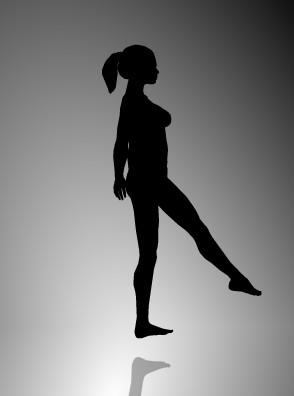
It troubles me. For ages I watched the dancer, thinking she's clearing spinning clockwise, pivoting on her left leg. So I'm right-brained, apparently, which may come as a surprise to those poor unfortunates who've experienced me in strategist mode, cautious, painstaking, and with an eye for every detail.
And I showed it to a physicist friend, who was even more surprised to see the dancer spinning clockwise. How can she be right-brained, for heaven's sake? She's a physicist!

And then I showed it to NMRBoy, who saw her turning anti-clockwise. This astounded me. How could this be? I could well believe that my comrade-in-arms is thoroughly left-brained, but not that he's mad.

She's blatantly turning clockwise!

And then I read the lists of characteristics again, and out of the corner of my eye I saw her turning anticlockwise, spinning on her right leg.

And now she does whatever I tell her to, the saucy minx.

Neil says that it's a sinusoidal projection, whatever that is, and that both directions are valid. I have no idea what that means, but I'm sure he'll explain it on his blog. I certainly hope so.

There's a comment below the dancer which says 'Her breasts are very perky...I'm mesmerized. Been watching her for 2 hours now.'

That's all. He's happy just to watch her - admittedly - perky breasts. But which way does she turn for him? Can he make her turn at will?

Now that's the challenge.

It's like poledancing for nerds.

11 October 2007

Questions

Hunched over a hot drink last night, I perhaps wasn't initially as intrigued as I ought to have been when my Dad showed me a supplement from the Irish Times. Lots of old articles, I thought. Interesting, but so what? And then I realised what he was showing me. There's a new Irish Times digital archive, with exact reproductions of every article from 1859 to 1996. I blinked, and rushed upstairs to see if could search for answers to something that I've wondered all my life.

When I was a child I heard stories of a horrific murder of a child by a teenager none too far from my house, and growing into my teens I decided that it hadn't happened, it was too monstrous, it was just a scary story made up by older brothers to frighten me. And then, a year after Jamie Bulger's death I read an article that referred to it. I spoke to friends in work, knowing they were from the area where it happened, and the right age to remember. And I listened, horrified and spellbound, as the great unmentioned nightmare of our parish was described.

But how much was true? How much rumour? I've never known, and always wondered.

And so last night it took just minutes to find the initial reports and the official story of what happened here on that summer day in the seventies. How the child was initially reported to have died accidentally, and then, a few days later his killer was brought to court. Details on the murder weren't published either at the initial hearing or the subsequent trial, and the killer's identity was kept out of the papers, but the dates were there, the address of the murdered child, the ages of both killer and child, the names of the psychiatrist and psychologist who dealt with the killer, and the guard who headed the investigation. But what happened? All the Irish paper of record notes is that eventually a full statement was made by the accused and all the facts were made clear. It was a different world, and the facts aren't featured. Still, the 1993 article gave the gist.

I've written it all down. Some horror stories are true.

The lad who was killed would have been the same age as my brother, had he lived. Over tea after reading the reports, I asked my brother about this. He hadn't known the boy, and had never heard of this. Was he sheltered from this? Were all his friends? And if so, how did it become a ghost story for the next generation of kids in our parish?

Nobody knows now, of course. Maybe that's for the best.

10 October 2007

And it gets better

There are legions of maxims about how, when you get down to it, the real race is only ever with ourselves. Well, following that principle, the national broadcaster has gone in for some even more surreal imagery today.

'Turkey plans to track down rebels in Iraq' it blasts as a headline.

I'm glad planning is involved. That could be dangerous without some advance scheming. It wouldn't be good to have turkeys running around the place like headless chickens. Mind, if turkeys are anything like mice, those plans could well gang aft aglay.

No, seriously.

Meanwhile, on BreakingNews.ie, I'm mildly puzzled by the headline 'Boy, 17, left detective with "life-long injury"'. What does this mean? Did a seventeen-year-old boy have an altercation with a detective and depart the scene, having injured the detective? Or did he depart having received a serious injury? Or had he long associated with a severely injured detective, and only recently decided to leave him? And should I just read it and find out?

I know, you probably think I need to get out more. Trust me, nowadays I think I need to get out less.

09 October 2007

Stranger than fiction

There are times when I worry about the lands where I live.

A few weeks back I read that 3,000 protestors were due to descend on to the Hill of Tara. Yes, you read that right. They were going to descend on to a hill. I only hope that they used parachutes, and that somebody took pictures.

And then today, I was listening to the news with half an ear when I heard that the national airline would be suspending four pilots because of a dispute. It wasn't clear whether they were to be suspended from one plane or four, though I think one would be best. Yes, you can picture it, can't you, a sleek Aer Lingus airbus gliding over Belfast, with two pilots dangling from each wing. That'd teach them.

I was drowsing off when I heard of some fierce gloomy news on the Irish wildlife front. It seems that dirty, disease-carrying foreign squirrels are not just destroying the landscape but are well on the way to wiping out our native reds. Such, at any rate, have been the findings, they said, of a nationwide survey of red squirrels. Now tell me, how in the name of all that's holy, does one survey a squirrel?

I mean, it's hard enough trying to corner a shopper when armed only with a clipboard.

I suspect nut bribery is involved.

You know, chuck your average panicked red a nut and you'll surely get her attention, and then, while she nibbles warily, occasionally freezing and looking around as she wonders if she's left the gas on, you can ask her how she feels about all these immigrants ruining the place. West of the Shannon now, don't you know?

Not in my day, I tell you.

08 October 2007

Earnest, Serious, and Smart

A friend of mine wrote a suitably indignant post a week or two back about how a leading freight company had delivered a hefty chunk of his stuff in a manner that might charitably described as nonchalant, crudely 'forging' his signature in the process. I'm really loathe to call a mildly depressed squiggly line a signature, but perhaps among the illiterati it would pass.

The brother, reading the post, laughed at my mate's singling out his Calvin and Hobbes books as among his most prized possessions. I hadn't found this remotely odd, and indeed a few days ago I raised this very point to one of my charming hostesses over the water. To my horror, she was - to all intents and purposes - ignorant of the pinnacles of human achievement that are these tales of a boy and his tiger.

What? You don't know Calvin and Hobbes? But it's the best thing in the world! And in a rush of deranged enthusiasm I explained how it was better than sandwiches, gargoyles, cheesecake, toffee, and my ex.

She wasn't convinced, especially on the last claim, but I sent her some links, and am still hoping they're doing their work.

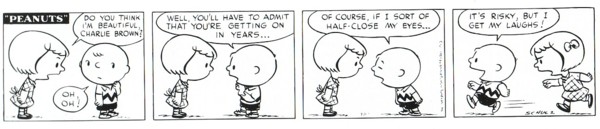
Anyway, so the other evening I was flicking through an old Peanuts collection, and was stunned by a strip from 1950, back in the dawn of the strip.

Charlie Brown ribbing Patty

Try not to get hung up on how odd and babyish the characters looked so early, and just read it again. And look at Charlie Brown's face as he runs away. This is Calvin and Susie, isn't it? Or at any rate, it reads like a template for that wonderfully repressed non-relationship.

You know Susie Derkins? Here's what Bill Watterson has to say about her:
Susie is earnest, serious, and smart - the kind of girl I was attracted to in school and eventually married. "Derkins" was the nickname of my wife's family's beagle. The early strips with Susie were heavy-handed with the love-hate conflict, and it's taken me a while to get a bead on Susie's relationship with Calvin. I suspect Calvin has a mild crush on her that he expresses by trying to annoy her, but Susie is a bit unnerved and put off by Calvin's weirdness. This encourages Calvin to be even weirder, so it's a good dynamic. Neither of them quite understands what's going on, which is probably true of most relationships. I sometimes imagine a strip from Susie's point of view would be interesting, and after so many strips about boys, I think a strip about a little girl, drawn by a woman, could be great.
Anyway, better to show than to tell, so here's Calvin and Susie jointly presenting a project on the planet Mercury. Understandably, Susie's been dreading this moment, having already wailed that they were going to flunk because of Calvin's messing about and that she'd have to go to a second-rate college because her idiot partner spent the study period drawing Martians.

07 October 2007

Faith and Moore

One day back in August I was thrilled to read memorable interviews in the Daily Telegraph with Michael Parkinson and the Archbishop of Canterbury ; they're thoughtful and fascinating and well worth reflecting on.

I often read the Telegraph while travelling; people tend to leave it behind, and like a print-crazed magpie I'm always there to swoop. Friends can look at me a tad askance on realising that I'm an occasional Torygraph reader, but aside from its tendency towards dishonesty on all issues European it's generally a pretty good paper.

Today's paper features a great article about the world's greatest living comics creator. Susanna Clarke, author of Jonathan Strange & Mr Norrell, which I keep meaning to read, introduces her subject by raving about Watchmen, arguably Moore's masterpiece, and then goes on to analyse his latest opus, Lost Girls, an attempt sixteen years in the making to see if pornography can be art. Clarke's feeling is that the book is a true thing of beauty, much of which she attributes to the coloured pencils of Melinda Gebbie, Moore's partner, but is ultimately unconvinced:
There's no doubt that Lost Girls is stimulating and erotic and that Gebbie's art matches the sensuality of the material, but it feels as if Moore the writer is firing on fewer than usual cylinders – which may say something about pornography's limitations as a literary form. The shape of a pornographic narrative is easily guessable in advance; the climax of the story must be, well, a climax. [. . .] One of the assumptions of the fantasy world that pornography inhabits is that sex should be consequence-free. Pornography by its very nature has a deadening effect on story.
I'll be looking to read it soon enough, for all that. Even Moore's failures are usually fascinating, and this sounds like no failure - merely a qualified success. Even minor Moore is special; I still treasure those first two issues of the abortive Big Numbers, after all, and suspect that if Moore had finished it that it'd be the benchmark by which all his other work is judged.

Speaking of which, Mr Moore was alluded to a recent issue of the new Buffy the Vampire Slayer comic. Issue six of Joss Whedon's Season Eight has Giles hauling Faith off to England to deal with a slayer who's about to cause a whole world of trouble. Trying to stress just how serious the situation is, Giles informs Faith that:
If the girl in question were merely guilty of the same mistakes you once made -- considerable though they may have been -- I would opt for rehabilitation.

But according to every augur in my employ, including the great bearded wizard of Northampton, unless this young lady is terminated before the fall's end, she will usher in --
Alan Moore gets namedropped and once they get to England our heroes come very close to bumping into a certain Converse-trainered Timelord and his rather minxy companion.

It's a good issue for pop culture.

06 October 2007

Sinless people in glass houses...

There's a bit of a kerfuffle going on over at the Times. It seems that comments editor Daniel Finkelstein, being either highly astute or else just bored and with a craving for shit-stirring, is rather unimpressed by an observation by Richard Dawkins in a recent Guardian interview. To quote Britain's village atheist:

"When you think about how fantastically successful the Jewish lobby has been, though, in fact, they are less numerous I am told - religious Jews anyway - than atheists and [yet they] more or less monopolise American foreign policy as far as many people can see. So if atheists could achieve a small fraction of that influence, the world would be a better place"

Now, you mightn't be surprised that people would start squawking 'anti-semitism' after such an observation, but I'm more that surprised nobody's thrown that particular stone at Richard D before now. After all, take perhaps his most eloquently vitriolic comment from his recent hatchet job:

"The God of the Old Testament is arguably the most unpleasant character in all fiction: jealous and proud of it, a petty, unjust, unforgiving control-freak; a vindictive, bloodthirsty ethnic cleanser; a misogynistic, homophobic, racist, infanticidal, genocidal, filicidal, pestilential, megalomaniacal, sadomasochistic, capriciously malevolent bully."

Dawkins doesn't even need to cite examples to back himself up, being content to point in the general direction of Leviticus, Deuteronomy, Numbers, Judges, and Exodus. But note how careful he is to call this God 'The God of the Old Testament'. He knows well what the fallout would be if he were to start ranting about 'the God of the Jewish Bible'.

Although that's what he means.

For what it's worth, the early Christians recognised these problems as well, and indeed it was largely because of these problems that Marcion, the first Christian to propose a formal canon of scripture, wanted to exclude the entirety of Jewish scripture from the Bible!

It took a lot of work from Origen and Athanasius to explain why Our Lord and his first followers saw these writings as inspired, and indeed invaluable. Essentially, it's because of them that we have the Bible that we do. But that's a story for another day. In the meantime, I think Chesterton's Introduction to the Book of Job might help a bit, especially his observation that:

"All the patriarchs and prophets are merely His tools or weapons; for the Lord is a man of war. He uses Joshua like an axe or Moses like a measuring rod. For Him, Samson is only a sword and Isaiah a trumpet. The saints of Christianity are supposed to be like God, to be, as it were, little statuettes of Him. The Old Testament hero is no more supposed to be of the same nature as God than a saw or a hammer is supposed to be of the same shape as the carpenter. This is the main key and characteristic of Hebrew scriptures as a whole"

You should read it. It's really rather remarkable.

05 October 2007

Hallmarks of one sort or another

The Irish rugby team must be fierce embarrassed about how their faces are plastered everywhere you look nowadays. I can't help feeling pretty sorry for Ronan O'Gara, who must blush whenever he sees a picture of himself emblazoned with the legend 'I'm converted' or 'cometh the hour, cometh the man'.

Andrew Trimble seems to have fallen into a discreet silence in his blog. A shame, as I was enjoying it. I'm still rather intrigued by one line in his first blog entry, when he remarked that his teammates probably think he's a bit of a weirdo because he's a Christian. I'm not sure what to make of that.

Is he saying that he's the only member of the squad who actually practices the faith he confesses, which is sadly all too possible?

Or that he's the only professed Christian in the squad, which although possible, seems kind of unlikely?

Or is he doing that Evangelical thing, effectively equating the terms 'Christian' and 'Evangelical Protestant', so if you're not an Evangelical, you're not really a Christian? I really hope he's not. . .

A couple of years back I almost gave a talk at a Christian Union event in Manchester, but in the end didn't, mainly because I couldn't quite sign up to their 'doctrinal basis', which was described as just being the basic truths that all Christians believe.

The UCCF website describes the 'DB' as outlining 'the central truths of the gospel'. Leaving aside how it's something to which only a tiny minority of Christians throughout history could have subscribed, this rather raises the question of what marks these eleven points as the central Christian truths?

Just for argument's sake, why is there no mention of the Eucharist, say? It is, after all, the only thing the Bible records Our Lord as having asked us to do for him. Seriously, look at Luke 22.19 and 1 Corinthians 11.24.

Why isn't this identified as a central truth of Christian belief?

Take a look at the letters of St Ignatius of Antioch, written on his way towards martyrdom in Rome in 107 AD. Ignatius had headed the Church in the city where the term 'Christian' had first been adopted, and is believed to have been a disciple of the apostle John.

For Ignatius, recognition of the Eucharist as true body and blood of Christ was the hallmark of the true Christian. In his letter to the Smyrnaeans, he identifies heretics by saying:

"They even absent themselves from the Eucharist and the public prayers, because they will not admit that the Eucharist is the self-same body of our Saviour Jesus Christ which suffered for our sins, and which the Father in his goodness afterwards raised up again. Consequently, since they reject God's good gifts, they are doomed in their disputatiousness."

Which isn't to get into an argument about the Real Presence, just to note that for the first Christians evangelised by the Apostles, this was the defining characteristic. So why doesn't this factor in the 'doctrinal basis'?

Is the UCCF claiming it knows better than the Apostles?

Hmmm.

04 October 2007

No frontiers

Sipping a reluctant cider in the local after the show last night, I was startled to see a small ball of fur peek a tentative nose into our snug. The others weren't nearly so surprised, and greeted the hairy interloper with a familiarity devoid of contempt.

'He's a regular?'

'Oh yes, he's our parish dog.'

'Our what?'

'He belongs to the priest. The one at the bar.'

I'd not seen a man of the cloth in our haunt before, so peered round the corner, to see at the bar a cropped head of thinning blondish hair at the pinnacle of a lengthy cassock.

'Oh,' I said, 'it's Father Mark.'

'You can recognise priests from the backs of their heads? That's quite a gift.'

'It's not my only one. Guess who else I can identify from that angle?'

Silence and shrugs.

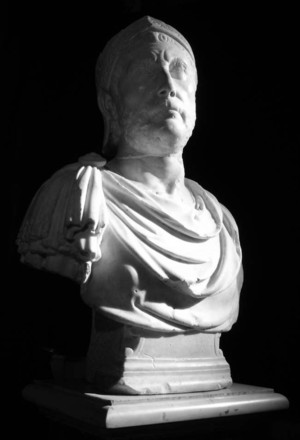
'The Emperor Augustus.'

'Well, that's just freakish.'

' It's his ears, you see. He has really distinctive ears. Apparently no two pairs of ears are alike, and his really stand out. Literally, I guess. But yeah, back in the day people used to think they could be used like fingerprints'

'Oh that's true! I saw it on C.S.I.!'

'There you go. Seriously though, I've often wondered whether anyone's tried to analyse Roman statues in this way. With the Roman thing for verism, it's surely more than possible that the ears differ on statues, that the sculptors didn't just do cartoon ears, and if so, then surely it'd just be a process of classifying them. I mean, there must be thousands upon thousands...'

'That'd be the best research project ever! Imagine the funding you'd get to travel to every museum in the world, tracking down all the statues, just taking plaster casts of ears!'

'Maybe. It'd be so bloody boring, though! There'd be a lot of caliper work, and high-tech scanning - that'd be fun for about ten minutes - and mainly just millions of charts. I bet some German geezer did it back in the nineteenth century anyway. It's the sort of thing they would have done. One of Mommsen's mates.'

'I've never heard of it. And you'd get funding. Lots of it. This could be your ticket out of this dump!'

'Now that's tempting. '

And then the bar shut.

03 October 2007

Could a Nivea-Guinness Merger be on the cards?

Is drunkenness good for the skin?

I know, you might think this a random question, but really it's the cheeriest thought I've had all day.

We all - aside from my charming hostess who points out that there's no conclusive scientific evidence on this point - know water's good for the skin, don't we? And we never drink quite so much water as when we're hungover, do we? Therefore, surely, hangovers are good for the skin, and so the alcohol that forges our hangovers must in turn be good for us.

I realise there's a flaw in the logic there somewhere, but I'm not feeling very virtuous at the moment, so give me a break.

02 October 2007

All's fair...

A friend of mine, an Ovid specialist, was delighted last week to see The Guardian celebrating his birthday with an article about Ovid's Ars Amatoria, his first century manual of seduction. It's not a bad article, though I've no idea how good the author's book is. Still, you could worse in introducing Ovid than to comment:

The Greeks may have written wonderfully about desire, but Catullus was the first classical poet to write about the joy and heartbreak of relationships. And Ovid left us a detailed, scandalous, hilarious, cynical, explicit and still user-friendly handbook on how to go about finding, and keeping, the man or woman of our dreams.

This fabulous poem, the Ars Amatoria, or The Art of Love, was first published around the time that Jesus Christ was teething. And it's still up to the job better than the stuff in the self-help section of the local bookshop.

The Ars is the ancient equivalent of a how-to book. It is a didactic poem - that is, a poem meant to teach you something. Its forebears in the genre of didactic poetry tended to be about respectable things such as farming and the natural sciences. Ovid's Ars Amatoria is quite a different proposition. Instead of teaching you the right time to prune your vines or how atoms work, it is full of brilliant information on sexual positions and how to apply makeup to maximise your pulling power. Ovid had taken a serious, learned literary genre and done something daringly racy and sexy with it.

It's been a long time since I've read the Ars, but as I remarked to my erudite friend last week, the gist of it, as I recall, is that men should basically stalk the women they fancy, while women should play hard to get. Frowning, he conceded that if it were necessary to sum up the poet's advice so crudely, I could do a lot worse.

Charlotte Higgins, author of the article and a new book on the Ars, instead highlights the importance of looking good, getting out there, self-belief, and keeping in touch. She picks some nice passages to illustrate what she's saying. I rather like:

What is softer than water,
What harder than stone? Yet the soft
Water-drip hollows hard rock. In time, with persistence,
You'll conquer Penelope. Troy fell late,
But fall it did.

Do persistence and patience always win out? I'm not sure, though it's a nice thought.

We'll see.